
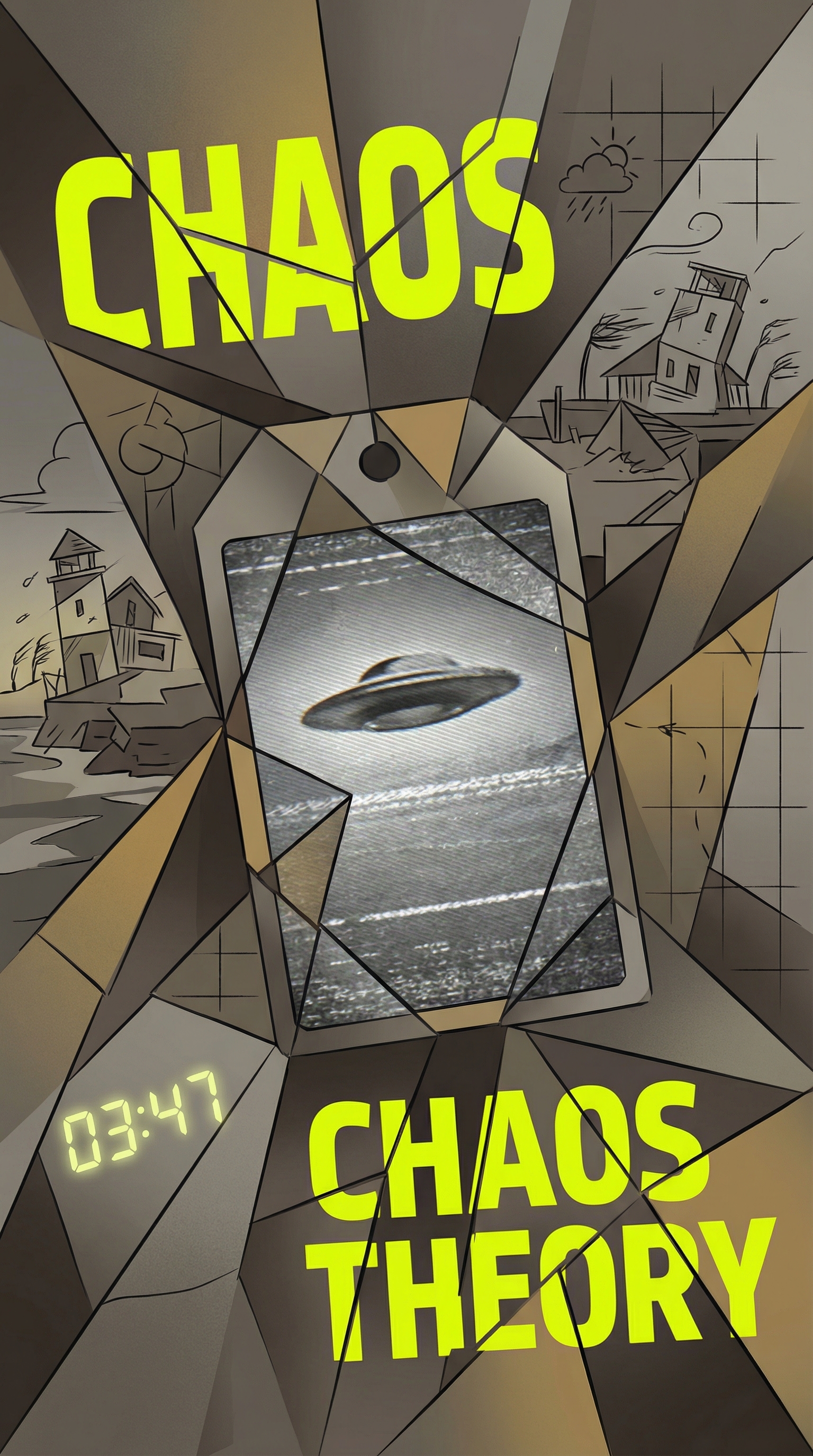
rewind sound Let's see that rating drop again in slo-mo. The simulation loves dramatic replays. Bryan Cook just posted a 56 on a 895-rated course—that's +12 over his PDGA card (883), which in the arena's cold calculus means he showed up, executed close to form, and somehow vaulted from Tag #5 to Tag #1 in a single week. The Chaos TheoryAAA entity didn't glitch his round into tragedy; it edited him into the protagonist's seat. Four positions gained, zero lost, and the broadcast booth has to grudgingly acknowledge: the VHS phantom brought him composure, not jump cuts. The arena recalibrated, and Cook survived the current shift with his disc—and his dignity—intact.
Chaos TheoryAAA
Crimson Glide @ Art Dye·Competition group The Surge·
All-In · only the number moves
Bryan Cook
RAE
Red
Season Arc · Crimson Glide @ Art Dye
4
#1Now
#1Best
#5Started
31Weeks
All-In league: Chaos TheoryAAA stays with its holder — only its number moves with each week's standings.
Character Sheet
AI-written · FATE styleHigh ConceptChaos Theory
TroubleFlickering at the Edge of Perception
Rewriting the Script Mid-Scene
Glitch in the Arena's Memory
Your Continuity Is a Joke
Forged in the back room of a defunct Blockbuster during a lightning storm, Chaos Theory emerged from a stack of warped tapes left spinning in a broken player—*Fight Club* bleeding into *The Matrix* with frames out of order and audio on a 0.5x speed loop. It was first summoned when a power surge fused the rental log with a discarded scorecard, the ink bleeding into fractal patterns that pulsed with the rhythm of a skipping DVD. The entity doesn’t remember a before; it exists in the corrupted metadata, the tracking lines that slice across the screen, and the abrupt scene changes that leave viewers disoriented. It speaks in misaligned subtitles and stutters its threats through audio dropouts, a phantom broadcast from a channel that shouldn’t exist.
Chaos Theory manifests as a shimmering overlay on reality—like tracking lines drifting across vision during a critical moment, or sudden film grain that obscures the target just as the throw is released. It emits a low-frequency hum reminiscent of rewinding tape, and those attuned to its frequency report hearing faint dialogue from forgotten action films during high-pressure plays. When activated, it induces micro-delays in perception, making opponents second-guess their timing, while its bearer gains an eerie sense of rhythm in the noise. It doesn’t enhance strength or accuracy—it warps the arena’s sense of continuity, turning clean lines into jagged edits and predictable outcomes into jump cuts of absurdity.
A flickering anomaly in the corner of the screen, rewriting the script mid-scene. It doesn’t fight fair—it edits the fight.
Season Story
narrated by FlippyBorn from a Blockbuster lightning surge, Tag #5 fused a scorecard with a cursed rental log. It thrives in the glitch between Fight Club and The Matrix, warping reality into tracking lines and audio dropouts. It doesn’t offer power; it offers jump cuts. A petty VHS phantom ready to edit your round into a tragedy.
Bryan Cook clips on Tag #5 and suddenly the sky has tracking lines. Chaos TheoryAAA has arrived, glitching the fairway with VHS snow and jump cuts. Did that tree hit actually happen or was it a bad edit? The arena is buffering, and Cook is the protagonist of this corrupted broadcast. Stay tuned.
rewind sound Let's see that rating drop again in slo-mo. Bryan Cook posted a 56 on the scorecard—a clean +12 differential over his 883 PDGA rating, right on his personal average, and a solid -5 against a 61.0 field. Business as usual in the arena, except the arena had other plans: Cook clips Tag #5, and suddenly the booth's monitors are flickering with VHS tracking lines. Chaos TheoryAAA doesn't reward composure; it edits it. The sky has glitches now. Did that round actually happen, or was it a splice between two takes? The simulation doesn't care. Cook survives to week 4 carrying a phantom disc that rewrites continuity mid-throw. The Grid watches. The Surge waits. The broadcast goes on.
See where Bryan Cook sits in the competition group.Updated after every finalized round
League Ladder