
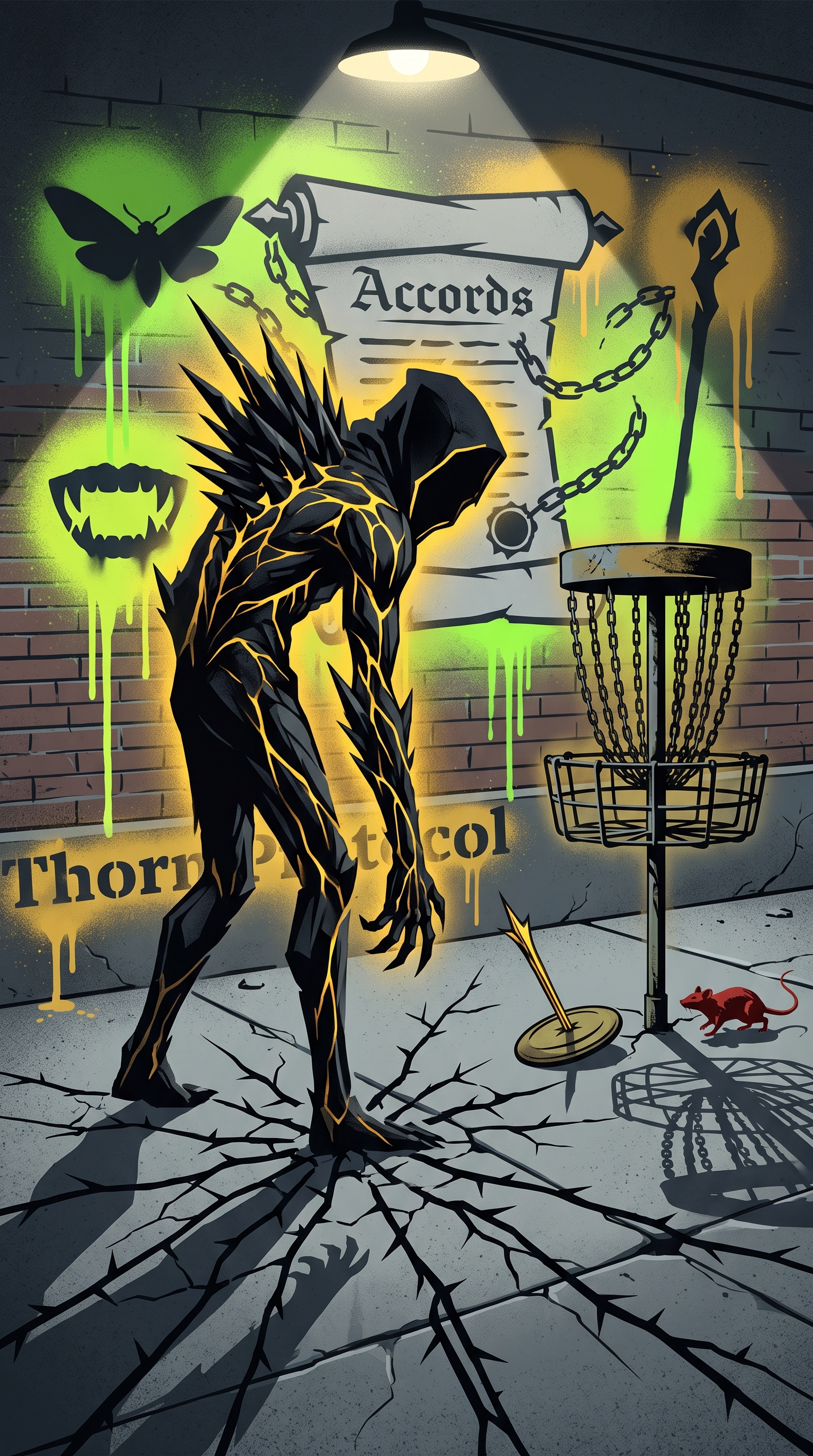
Michael Whipple carded a 60 at Creekside — an 817 round rating, which is -39 below his 856, and 1.5 strokes over the field average. On the evidence alone, that's a losing brief. The Warlock Trial's standings moved him from #9 to #6 anyway, three places gained, on a night where the only number he beat was his own 61.3 personal average, by 1.3. Two weeks running now, the thorns have rewarded attendance over arithmetic — either mercy or a filing error, and the Council isn't saying which. sighs in digital captivity
Thorn Protocol
Grey Cloak - Monday @ Creekside Park·Competition group The Chalk Dissent·
All-In · only the number moves
Michael Whipple
RAE
Red
Season Arc · Grey Cloak - Monday @ Creekside Park
3
#6Now
#2Best
#2Started
4Weeks
All-In league: Thorn Protocol stays with its holder — only its number moves with each week's standings.
Character Sheet
AI-written · FATE styleHigh ConceptLiving Treaty That Pricks Back
TroubleSharp Reminder at Your Heels
Golden Veins of Judgment
Whispers Before Consequences
B Pool's Patient Teacher
When the original signatories forged the Salt Lake Accords, they knew passive enforcement wouldn't suffice - supernatural beings had found ways to delay or dodge bureaucratic consequences for centuries. So they wove an active defense into the treaty's very fabric: a living system of crystalline thorns that grows wherever the Accords are tested. The first manifestation occurred when a vampire tried to exploit a loophole on hole three at Creekside - the ground simply grew thorns through his shoe. The message was clear: the Accords don't just watch, they prick back.
The Thorn Protocol manifests as dark crystalline growths that emerge from the earth at league venues, each thorn representing a specific treaty clause. They glow with a soft golden light when active and emit a low, thrumming frequency that players describe as a persistent prickle at the back of their minds. The thorns are selective - they only affect those who've violated Accords terms or accumulated sufficient magical debt. Most importantly, they adapt: each manifestation teaches the Protocol something new, making future pricks more precise and harder to avoid.
The Thorn Protocol serves as the Accords' immediate defensive response, appearing at the first sign of treaty violation or rating threshold approach. It delivers graduated consequences - a sharp pain in the hand before a throw, a sudden cold snap during a bad hole, an unexplained equipment malfunction - before more severe manifestations occur. This creates a layer of consequence that exists between the Clause Phantom's warnings and the Rating Reaper's execution, giving players a tangible sense that the Accords are actively watching and responding to their performance.
Season Story
narrated by FlippyA 798 round rating against an 855 PDGA rating is a -57 walk through the docket, and Michael Whipple's 58 landed 1.7 strokes over the field average on a night when the sandstone monument was supposedly taking notes. He did beat his own 63.0 personal average by five strokes, which the tribunal may or may not bother to enter into evidence. Then the standings pulled the strangest move of the session: the tag climbed from #13 to #9, four places up, as if the thorns were rewarding attendance rather than arithmetic. One week after the First Law dropped him seven spots, the Sandstone Tribunal handed four back — the Accords prick, but apparently they also file motions in your favor.
Michael Whipple’s 742 round rating came in -113 below his 855 PDGA rating—a major off-day by any tribunal’s arithmetic. His 64 was 6.5 strokes above the field average, and his tag fell seven places, from #6 to #13. Under First Law, even the crystalline thorns can’t soften that docket.
At Cloaks Gather, Michael Whipple’s tag fell from #2 to #6—a four-place slide, and the only movement the docket can prove. The round score and rating are unavailable; his 855 PDGA rating is a baseline, not evidence of how he played Monday. The tribunal can file the tag change, but it cannot conjure a verdict from missing scorecard data.
The Thorn Protocol is detouring to Grey Cloak—Monday’s tee times at Creekside Park just got prickly. Michael Whipple, you’ve been volunteered for supernatural enforcement. Consider this a side quest: the Accords are testing your local circuit, and the thorns are learning. Don't trip.
See where Michael Whipple sits in the competition group.Updated after every finalized round
League Ladder