
Philip Romney posted a 995 round against a 997 rating, exactly -2 below rating: a textbook shrug on the emotional scale, with his 51 landing 0.3 strokes worse than the 50.7 field average but 1.7 strokes better than his personal average. At Visual Noise on The Pattern - River Bottoms, Ghost Protocol held at 2 → 2, because apparently the cosmic pointlessness of ritualized tag swapping still requires a scorecard and a witness. The file remains open; the leaderboard yawns, and the booth is processing the paperwork.
Ghost Protocol
The Pattern - River Bottoms·Competition group Pool A·
All-In · only the number moves
Philip Romney
RPA
Gold
Season Arc · The Pattern - River Bottoms
6
#2Now
#1Best
#1Started
8Weeks
All-In league: Ghost Protocol stays with its holder — only its number moves with each week's standings.
Character Sheet
AI-written · FATE styleHigh ConceptA File That Shouldn't Exist
TroubleMy Scorecard Never Matches
Papers Shuffle When Unwatched
Wins May Not Count
The Audit Approaches Again
Ghost Protocol was created during the Great Audit of '89 when the Bureau discovered thousands of player records that had been improperly filed - neither fully active nor officially deleted. Rather than fix the error and admit the system failure, they created a new classification to contain the problem, labeling the errant files as 'procedurally non-existent' while keeping them in a shadow archive. The protocol has since expanded to include players who trigger too many audit flags, those whose attendance gaps cannot be explained, and anyone who asks too many questions about the Bureau's operations.
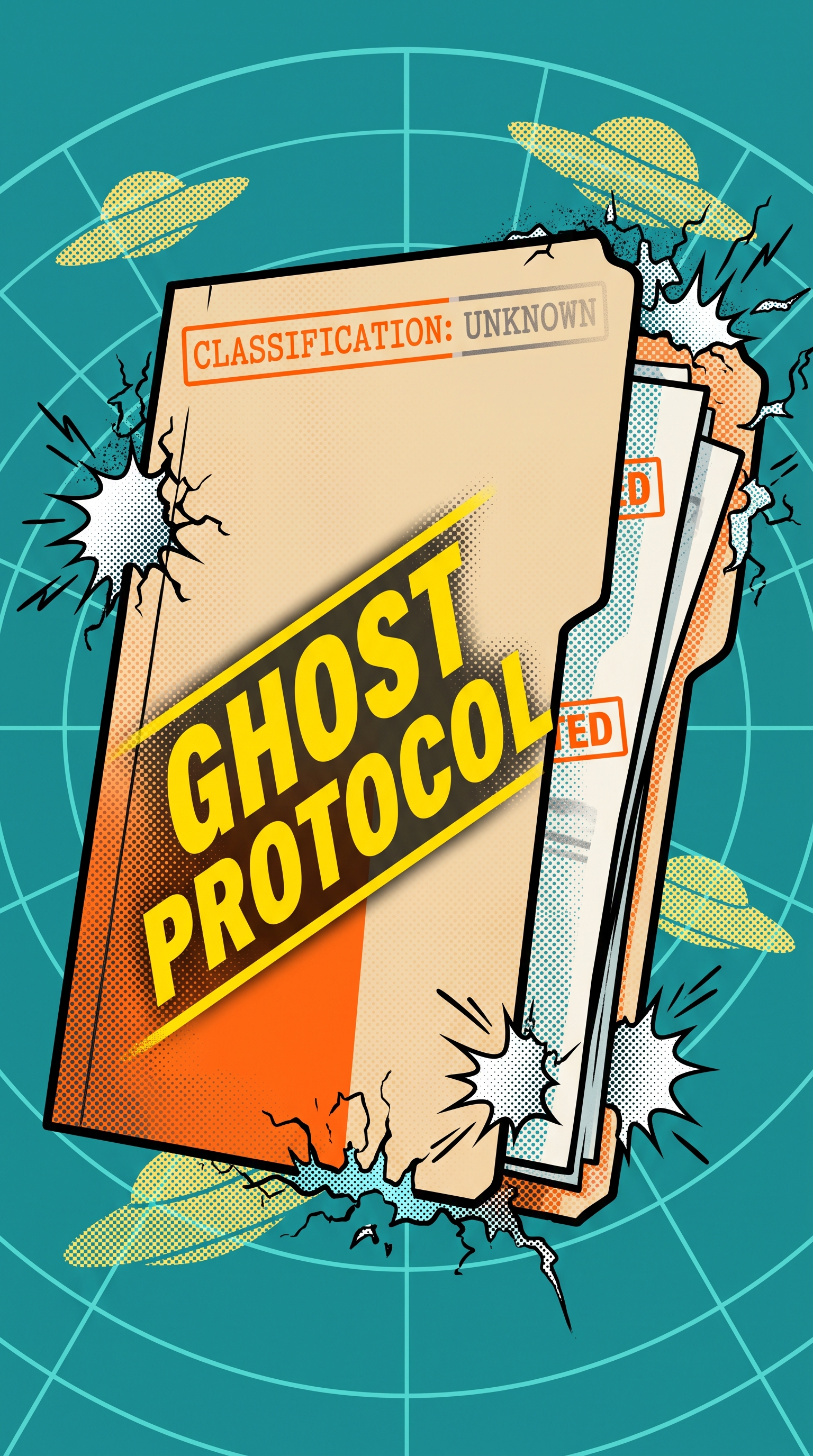
Ghost Protocol manifests as a document that partially phases in and out of visibility depending on the viewer's clearance level. The file contains text that rearranges itself when not being directly observed, making it impossible to capture a complete screenshot or photograph. It emits a faint bureaucratic hum that other players can sense but not locate, creating persistent unease in their proximity. The document's header displays 'CLASSIFICATION: UNKNOWN' in letters that sometimes appear black, sometimes red, and sometimes not at all.
Ghost Protocol tracks players whose competitive history has been flagged as 'questionably legitimate' - their wins may or may not count toward clearance advancement, their losses may or may not be recorded in official standings, creating persistent uncertainty about their true status within the Containment Zone. Players with Ghost Protocol classification become the ultimate wildcards: other competitors cannot verify their capabilities through standard Bureau channels, forcing them to either trust the Ghost Protocol player or avoid them entirely.
Season Story
narrated by FlippyPhilip Romney's 979 round came in -18 below his 997 rating, two strokes better than the field average yet a half-stroke worse than his own baseline. The Bureau responded by promoting his tag from 8 to 2 anyway—Ghost Protocol gaining six positions while the scorecard reads like a mild audit flag. Ritualized tag swapping remains the preferred method of ignoring inconvenient data. Redacted. Moving on.
Due to absence from Week 4 (Draper Moire), tag number moved from 5 to 7. (Week 4 of 10)
Philip Romney posted a 1004-rated round, a crisp +8 over his 996 rating, and still sits at #2 with Ghost Protocol humming in his bag. That's a warm glow of competence—the anomaly didn't advance, but it didn't retreat either. The Bureau's file notes a steady signal: no flicker, no redaction, just a surveyor who knows where the geometry bends. The static from Week 1? Still here. The side quest? Still running. But this week, the scorecard matched the clearance level.
glubs in triplicate Per the file, Romney’s Week 1 dominance was... redacted. Sliding from #1 to #2, he ghosted the top spot with a round that matched his average perfectly. Too convenient. Now he carries Ghost Protocol, a tag from the Great Audit of '89 that flickers whenever you look directly at it. Did he lose the lead, or did the static eat the data? The Pattern shifts, clearance is downgraded. File closed.
Ghost Protocol is detouring to The Pattern - River Bottoms. Philip Romney, enjoy your spinoff episode. It’s a side quest, not a reset. The ink’s fading, but the file is still open. The static is loud, but the cameras are rolling. Cut to local feed.
See where Philip Romney sits in the competition group.Updated after every finalized round
League Ladder